
NBA Prop Bet Odds Explained: How to Read Lines and Find Value
 Available in US
Table of Contents
Understanding odds is the foundational skill that separates recreational bettors from those who approach NBA prop betting as a serious endeavor. Every prop bet comes with odds that determine both your potential payout and the implied probability the sportsbook assigns to that outcome. Bettors who cannot read and interpret these numbers are gambling blind, unable to assess whether a line offers genuine value or simply looks attractive on the surface.
The difference odds make on long-term profitability is substantial. Two bettors might identify the same player prop as likely to hit, but one finds -105 odds at their sportsbook while the other accepts -120 at a different book. Over hundreds of bets, this seemingly small difference compounds into significant profit divergence. The bettor getting better odds builds a larger bankroll even with identical analytical skill because the mathematics of betting reward those who pay attention to price.
This guide breaks down everything you need to know about NBA prop bet odds, from basic reading of American odds format through advanced concepts like expected value calculation and line movement interpretation. Mastering these concepts will not make you a winning bettor by itself, but failing to understand them guarantees you will struggle regardless of how strong your player analysis becomes.
American Odds Basics
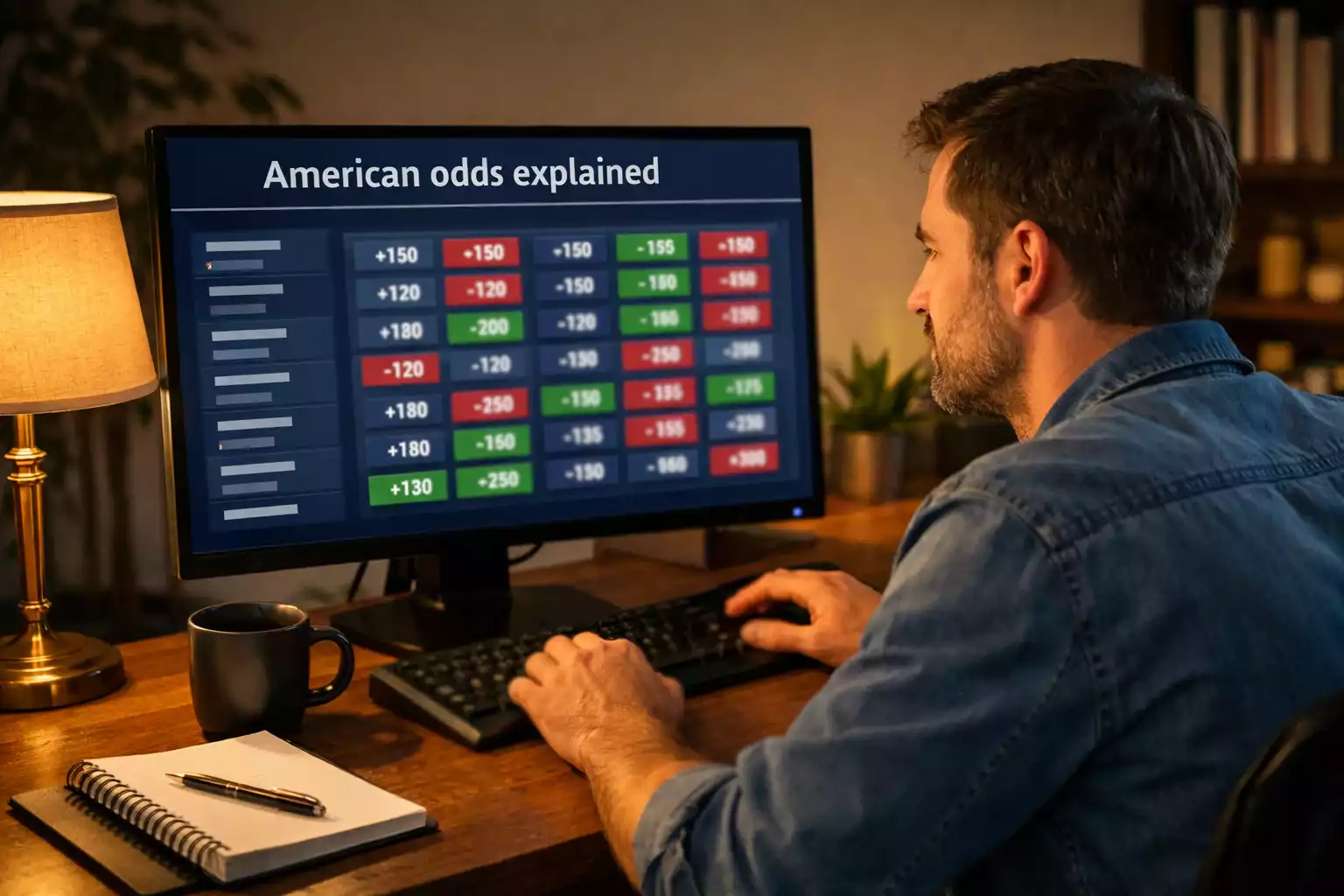
American odds express betting prices using positive and negative numbers that indicate both the potential payout and the implied probability of an outcome. Negative odds tell you how much you must risk to win 100 dollars, while positive odds tell you how much you win on a 100 dollar wager. This format dominates NBA betting markets in the United States and appears on most major sportsbook platforms.
Negative odds like -110 or -120 indicate the favorite outcome that sportsbooks believe is more likely to occur. The number represents how much you need to bet to profit 100 dollars. At -110 odds, you risk 110 dollars to win 100 dollars, meaning a successful bet returns your original 110 dollar stake plus 100 dollars in profit. At -120 odds, you risk 120 dollars to win 100 dollars, reflecting a slightly lower probability outcome that requires more capital to generate the same profit.
Positive odds like +150 or +200 indicate underdog outcomes that sportsbooks believe are less likely. The number represents how much profit you collect on a 100 dollar wager. At +150 odds, a successful 100 dollar bet returns your original stake plus 150 dollars in profit. At +200 odds, the same 100 dollar bet returns 200 dollars in profit plus your original stake. Higher positive numbers indicate longer odds and larger potential payouts reflecting lower probability outcomes.
Standard prop bet pricing typically lands around -110 on both sides of an over/under line. This means the sportsbook believes both outcomes have roughly equal probability, and the small edge they take on each side generates their profit regardless of which outcome occurs. When you see -110/-110 pricing, the sportsbook is essentially charging you a fee to participate rather than expressing strong conviction about which side will win.
Calculating payouts from American odds becomes automatic with practice. For negative odds, divide 100 by the absolute value of the odds, then multiply by your bet amount. A 50 dollar bet at -110 returns 50 times 100 divided by 110, or approximately 45.45 dollars in profit. For positive odds, multiply your bet amount by the odds divided by 100. A 50 dollar bet at +150 returns 50 times 1.5, or 75 dollars in profit. These calculations help you understand exactly what you stand to gain before placing any wager.
Implied Probability
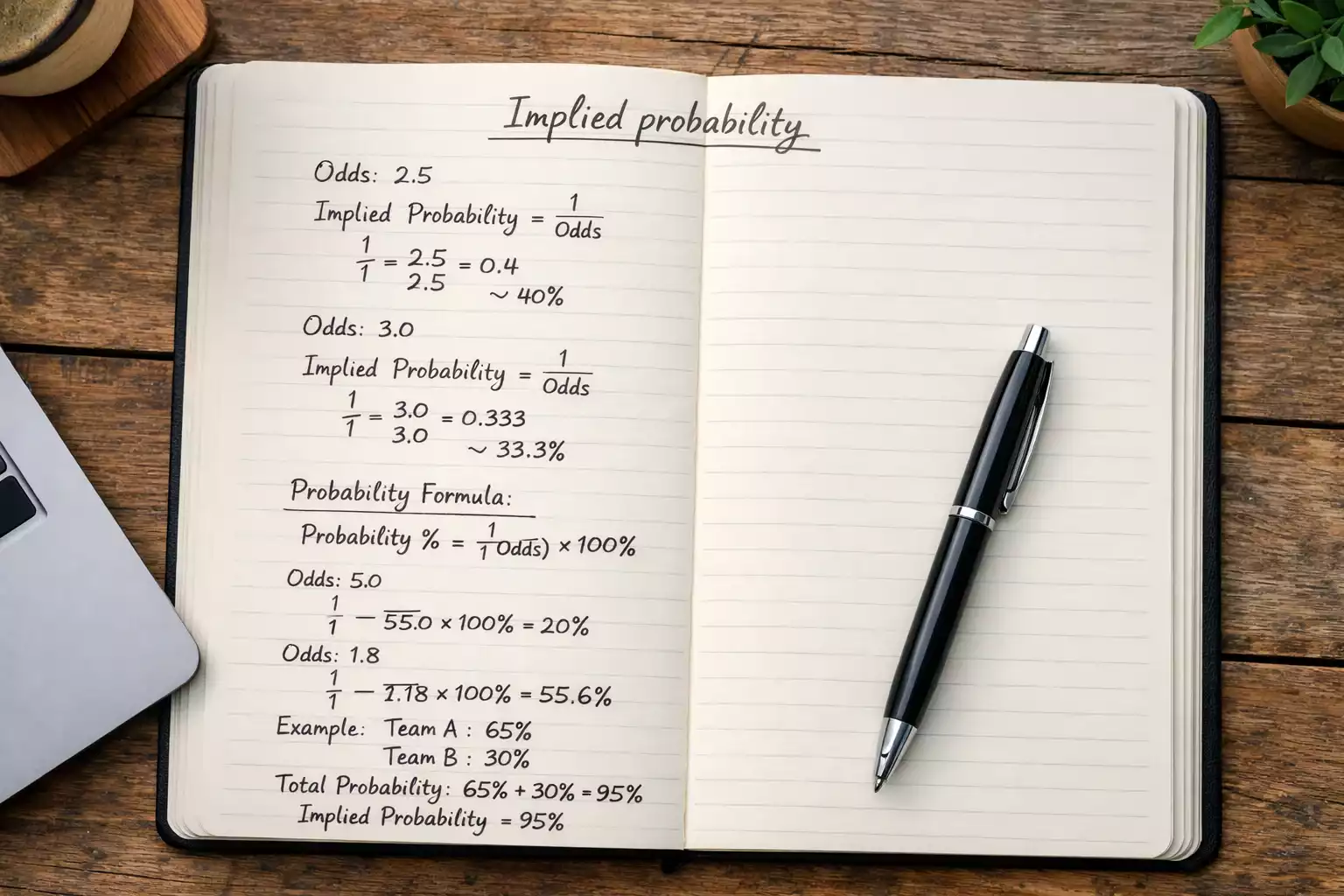
Every set of odds corresponds to an implied probability that the outcome will occur. Converting odds to probability allows you to compare the sportsbook’s assessment against your own projection and identify situations where you believe the market has mispriced an outcome. This comparison is the foundation of value betting.
The formula for converting negative American odds to implied probability divides the absolute value of the odds by itself plus 100. For -110 odds, the calculation is 110 divided by 210, yielding approximately 52.4 percent implied probability. For -150 odds, the calculation is 150 divided by 250, yielding 60 percent implied probability. Higher negative numbers correspond to higher implied probabilities because the sportsbook is more confident that outcome will occur.
Converting positive odds uses a slightly different formula. Divide 100 by the odds plus 100. For +150 odds, the calculation is 100 divided by 250, yielding 40 percent implied probability. For +200 odds, the calculation is 100 divided by 300, yielding approximately 33.3 percent implied probability. Lower positive numbers reflect higher implied probabilities, while larger positive numbers indicate increasingly unlikely outcomes.
The practical application of implied probability is straightforward. If you project that a player has a 55 percent chance of going over his points line, but the implied probability from the odds is only 48 percent, you have identified potential value on the over. Conversely, if your projection suggests 45 percent probability but the odds imply 52 percent, the line does not offer value regardless of how confident you feel about the player’s performance.
Finding edges through probability comparison requires honest assessment of your own projection accuracy. Claiming you see value everywhere usually means your probability estimates are systematically optimistic. True value exists only when your projection meaningfully exceeds the implied probability and when your projection methodology has demonstrated accuracy over time. Discipline in probability assessment separates profitable bettors from those who convince themselves they see edges that do not actually exist.
Understanding Juice
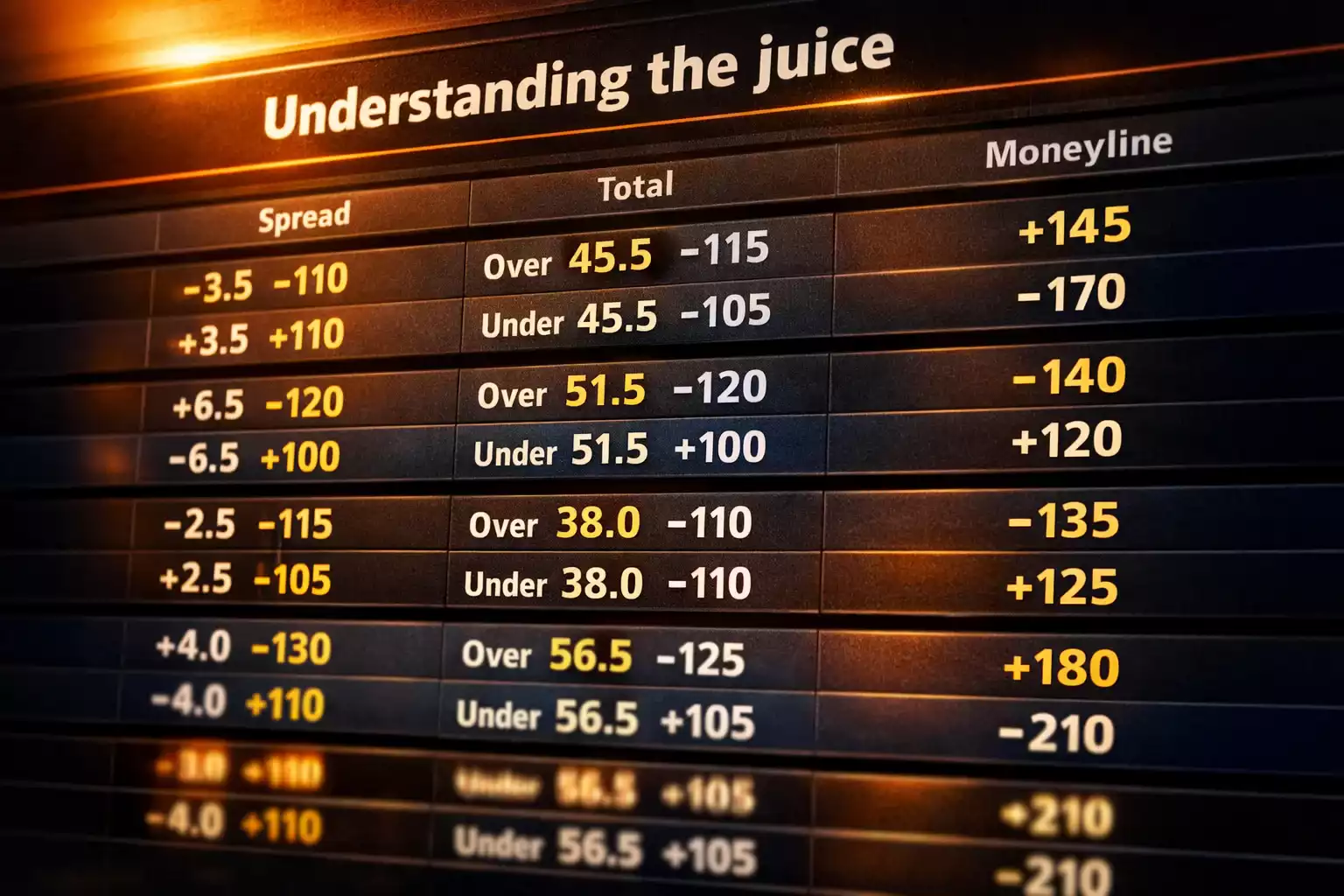
The juice, also called vig or vigorish, represents the sportsbook’s built-in profit margin on every bet. When you see -110 odds on both sides of a prop, the juice is embedded in that pricing. If the true probability of each outcome were exactly 50 percent, fair odds would be +100 on both sides. The -110 pricing means you are paying a roughly 4.5 percent premium for the privilege of betting.
Understanding how sportsbooks profit from props clarifies why beating the market is difficult. If a book takes equal action on both sides of a -110/-110 line, they pay out less than they collect regardless of which outcome occurs. They risk nothing and profit from the juice alone. This business model means sportsbooks do not need to predict outcomes perfectly. They only need to set lines that attract balanced action and let the mathematics of juice generate their margin.
Standard juice on NBA props typically ranges from -110 to -115 on each side, though this varies by sportsbook and prop type. Higher-volume markets like points props for star players often have lower juice because competition among books drives prices toward efficiency. Lower-volume markets like defensive props or combination props sometimes carry higher juice because sportsbooks face more uncertainty and fewer bettors shop for better prices.
Reduced juice offerings from certain sportsbooks can significantly impact long-term profitability. A book offering -105 instead of -110 on both sides cuts your cost per bet nearly in half. Over thousands of bets, this difference compounds dramatically. Sharp bettors prioritize reduced juice books for their regular betting volume, accepting standard juice only when a specific line offers enough edge to justify the higher cost.
The impact of juice on long-term results deserves emphasis. At -110 odds, you need to win approximately 52.4 percent of your bets just to break even. Every percentage point of win rate above that threshold generates profit, while every point below generates losses. Reducing juice to -105 drops your breakeven threshold to roughly 51.2 percent, making profitability substantially easier to achieve with the same analytical skill.
Over/Under Lines Explained
Over/under lines form the foundation of most NBA player prop bets. The sportsbook sets a number representing their projection for a statistical category, and bettors choose whether the actual result will exceed that number or fall below it. Understanding how these lines are set and what causes them to move provides essential context for identifying value.
Sportsbooks set initial lines using a combination of historical data, projection models, and situational adjustments. They will analyze a player’s season averages, recent performance trends, and typical output against similar opponents to generate a baseline projection. Known factors like injuries to teammates, home versus away splits, and rest situations receive adjustments. The goal is setting a line that attracts roughly equal betting action on both sides while accurately reflecting expected outcomes.
Line movement occurs when betting action or new information causes sportsbooks to adjust their numbers. If sharp bettors hit the over heavily on a points prop, the line might move from 22.5 to 23.5 to balance action and reflect the market’s updated assessment. Injury news affecting the target player or his teammates can cause rapid adjustments as sportsbooks incorporate the new information. Understanding why lines move helps you interpret whether a movement represents sharp information or simply public money flooding one side.
Half-point lines hold significant importance in prop betting because they eliminate the possibility of a push, where the result exactly matches the line and bets are refunded. A line of 22.5 points forces a decisive outcome on every bet. Some sportsbooks offer the option to buy points, moving the line by a half point in your favor for reduced odds. Whether buying points offers value depends on the specific number and how often results land exactly on or near the key threshold.
The significance of key numbers varies by prop type. In points props, certain totals appear more frequently than others based on how basketball scoring works. Analysts track how often players finish at specific point totals to identify which half-point differences matter most. For rebounds and assists, lower overall numbers mean each threshold holds relatively more importance. Recognizing which lines sit near high-frequency outcomes helps you assess whether buying points or accepting worse odds provides better expected value.
Line Shopping for Props
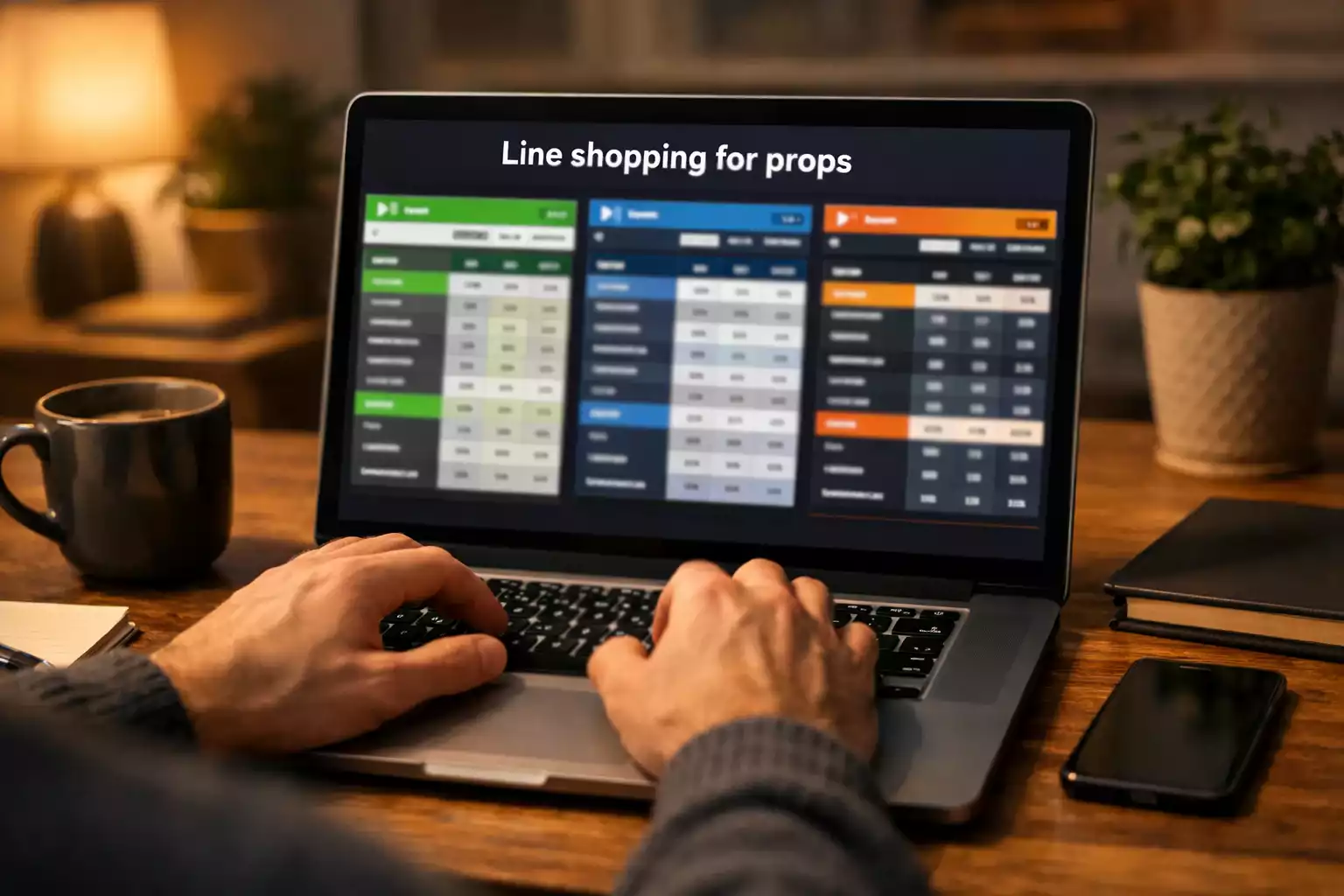
Line shopping involves comparing odds across multiple sportsbooks to find the best available price for your desired bet. This practice matters more for props than for game lines because prop markets have wider variation in pricing across books. A player’s points line might be 22.5 at one sportsbook and 23.5 at another, representing a massive difference in expected value for bettors considering the over.
Why line shopping matters more for props stems from how sportsbooks prioritize their line-setting resources. Game spreads and totals receive intense attention because they attract the most betting volume. Sportsbooks employ sophisticated models and adjust quickly to market information. Player props receive less attention because individual markets attract smaller handles. This creates opportunities for meaningful price discrepancies that would not exist in higher-profile markets.
Comparing books effectively requires accounts at multiple sportsbooks and a systematic approach to checking lines before betting. Dedicated bettors maintain spreadsheets tracking prop lines across their accounts or use line comparison tools that aggregate odds in real time. The few minutes spent finding the best line often adds significant expected value compared to accepting whatever price your primary sportsbook offers.
Real examples of line differences illustrate the stakes involved. One sportsbook might offer a player’s assists over at 6.5 with -110 odds while another offers the same over at 6.5 with +100 odds. Betting 100 dollars on the first book risks 110 to win 100, while the same bet on the second book risks 100 to win 100. The second option is clearly superior. Even more dramatic differences occur when line numbers themselves vary between books. These discrepancies exist regularly for anyone willing to look for them.
Tools for odds comparison have proliferated as legal sports betting expanded across the United States. Websites and apps aggregate prop lines from major sportsbooks, allowing you to sort by player or statistical category and instantly identify the best available price. Using these tools costs nothing and takes minimal time while providing significant edge over bettors who accept whatever odds their single sportsbook offers.
Understanding Line Movement
Lines move for two primary reasons: betting action imbalances and new information. Distinguishing between these causes helps you interpret whether movement represents sharp money you should respect or public money you might consider fading. The direction and timing of line movement provide clues about which factor is driving the change.
Sharp money indicators reveal when sophisticated bettors have identified value and acted on it. When a line moves against the weight of public betting, sharp action is likely responsible. If 70 percent of bets are on the over but the line moves down, the sportsbook is responding to influential money on the under rather than bet count. Sharp money also tends to come in early before lines have fully adjusted to new information, while public money concentrates closer to game time.
The decision of when to bet early versus late depends on your information and how you expect lines to move. If you believe you have an informational edge that the market has not yet priced in, betting early locks in value before lines adjust. If you expect sharp bettors to move lines in your direction, waiting might get you a better number as public money accumulates on the other side. There is no universally correct answer because optimal timing depends on the specific situation.
Reverse line movement describes situations where lines move opposite to the direction public betting suggests. This pattern often indicates sharp money that sportsbooks respect enough to move the line despite imbalanced recreational action on the other side. Identifying reverse line movement does not guarantee the sharp side will win, but it signals that professional bettors see value opposite the public consensus.
Line movement in prop markets can be more erratic than in game markets because lower betting volume means individual large bets move lines more dramatically. A single sharp bettor hitting a prop hard might cause a full point of movement that would require thousands of bets to achieve on a game spread. This volatility creates both opportunity and noise. Separating meaningful movement from random fluctuation requires experience and contextual awareness about the specific prop market.
Calculating Expected Value
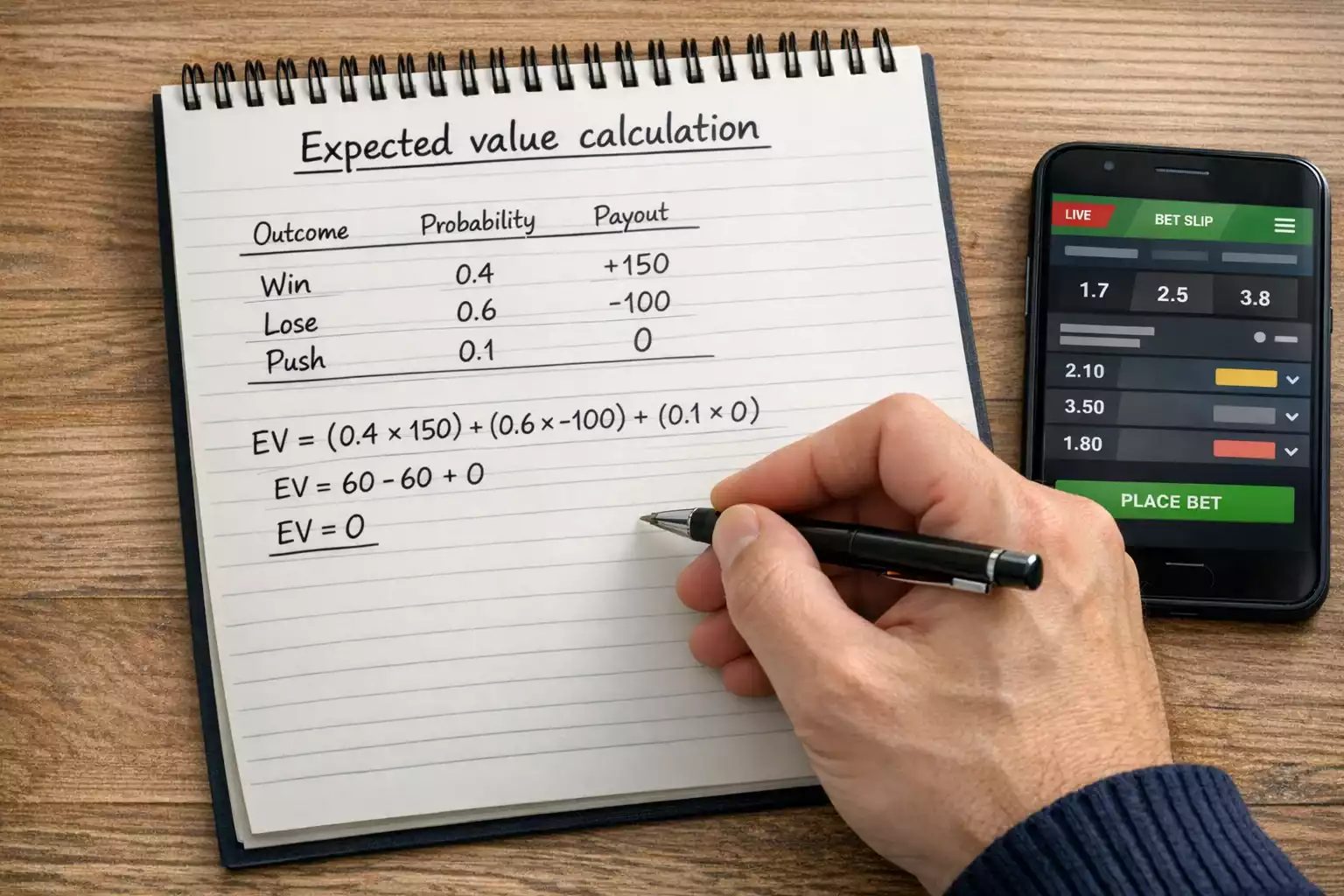
Expected value quantifies the average outcome of a bet if placed many times under identical conditions. A positive expected value bet generates profit over the long run even though individual outcomes vary. Understanding and calculating EV transforms betting from guesswork into mathematics, providing a framework for evaluating every potential wager objectively.
The EV formula multiplies the probability of winning by the profit if you win, then subtracts the probability of losing multiplied by the amount lost. If you project a 55 percent chance of winning a bet that pays +100, your EV calculation is 0.55 times 100 minus 0.45 times 100, which equals positive 10 dollars per 100 dollar wager. This positive EV means the bet is mathematically profitable regardless of whether any single instance wins or loses.
Determining when a bet has positive EV requires accurate probability estimation, which is the challenging part. The formula itself is simple arithmetic. The difficulty lies in generating projections that accurately reflect true probabilities. Most bettors overestimate their projection accuracy, convincing themselves that positive EV exists when their probability estimates are actually flawed. Honest self-assessment about your analytical edge is essential for applying EV concepts profitably.
Making your own projections involves gathering relevant data, applying appropriate adjustments for situational factors, and generating a probability estimate for each outcome. Some bettors build statistical models that automate this process, while others develop intuitive frameworks informed by research and experience. The method matters less than the accuracy of the output. Whatever approach you use, track your projections against actual outcomes to measure whether your methodology produces reliable estimates.
Practical EV examples with props illustrate the concept in action. Suppose a player’s rebounds line is 7.5 at -110 odds, implying roughly 52.4 percent probability for each side. Your analysis suggests a 58 percent chance the player exceeds 7.5 rebounds based on matchup factors and recent rebounding trends. The EV calculation is 0.58 times 90.91 minus 0.42 times 100, which equals approximately plus 10.73 dollars per 100 dollar wager. This positive EV justifies betting the over despite the -110 juice eating into your profit margin.
Odds Across Different Sportsbooks
Book-specific tendencies emerge when you compare prop offerings across the major sportsbooks. Some books consistently offer better odds on player props as a customer acquisition strategy, accepting lower margins to attract betting volume. Others maintain higher juice but offer broader market selection or superior user experience. Understanding these tendencies helps you allocate your betting volume toward books that offer the best overall value.
Which books have the best prop odds varies by sport, bet type, and time period. A book that offers excellent NBA player props might have inferior odds on NFL player props. Promotions and competitive dynamics cause books to adjust their pricing continuously. Rather than identifying a single best book, sophisticated bettors maintain accounts at multiple platforms and check each before placing any bet. The best book for a specific prop today might not be the best book tomorrow.
When odds differ significantly between sportsbooks, the divergence usually reflects one of three scenarios. The first possibility is that one book has adjusted to new information while another lags behind. The second is that one book simply sets softer lines on certain market types due to business strategy. The third is that sharp action has hit one book but not yet propagated across the market. Identifying which scenario applies helps you assess whether the better odds represent genuine value or merely slower market reaction.
Arbitrage opportunities occasionally arise when line differences are large enough to guarantee profit by betting both sides at different books. A points over at +110 at one book and the under at +110 at another book would guarantee profit regardless of outcome. These opportunities are rare and typically close quickly, but bettors monitoring multiple books in real time occasionally capture them. Most value from line shopping comes not from arbitrage but from consistently getting better prices that add up over hundreds of bets.
Practical Odds Analysis
Building your evaluation process requires combining multiple analytical steps into a systematic routine executed before placing any bet. Start by identifying props where your analysis suggests an edge. Calculate implied probability from the available odds and compare it to your projection. Check multiple sportsbooks to find the best available price. Only after completing these steps should you decide whether to bet and how much to wager.
Step-by-step analysis might work as follows for a specific prop. You project that a guard will exceed his assists line based on matchup analysis showing his team faces a defense that surrenders high assist rates to opposing point guards. The line is 6.5 assists at -115 odds, implying approximately 53.5 percent probability. Your projection estimates 58 percent probability. You check three other sportsbooks and find one offering -105 odds on the same line. The improved odds shift implied probability to 51.2 percent, widening your expected edge. You bet the over at the book offering -105.
When to pass on a bet is as important as when to engage. If your projected edge is small and your confidence is moderate, the risk-adjusted return might not justify the wager. If line shopping reveals poor prices everywhere, waiting for better opportunities makes sense. Not every prop with apparent edge deserves a bet. Discipline in selection protects your bankroll from marginal wagers that offer insufficient compensation for the risk involved.
The accumulation of small edges across hundreds of bets is how profitable prop bettors generate returns. No single bet defines long-term results. Consistent application of sound odds analysis, patient line shopping, and rigorous EV calculation compounds into meaningful profit over time. Bettors who skip these steps might get lucky occasionally, but they cannot sustain profitability against a market that extracts juice from every careless wager.
From Numbers to Profit
Mastering NBA prop bet odds is necessary but not sufficient for profitable betting. Understanding how to read lines, calculate implied probability, and identify positive expected value provides the mathematical foundation. But applying these concepts requires analytical skill in player projection, discipline in bet selection, and patience to let the math work over sufficient sample sizes.
The temptation to skip odds analysis because the numbers seem tedious is understandable but costly. Bettors who accept whatever odds their primary sportsbook offers are donating value to the market with every wager. Those who calculate implied probability and compare it to projections can identify which bets actually offer edge. Those who shop for the best available price extract additional value that compounds over time.
Commit to building odds analysis into your standard betting process. Check implied probability on every prop you consider. Shop lines across multiple books before placing any wager. Calculate expected value when you have meaningful projections to compare against market prices. These habits separate recreational bettors who provide sportsbook profits from serious bettors who extract value from the market. The mathematics reward attention and punish carelessness.
Recommend
Written by the editors at nbapropbets.com.
